
In today’s digital world, businesses must compete not only locally but also online. With millions of searches happening every minute on Google, appearing at the top of search results has never been more important. While SEO helps you grow organically, sometimes you need instant visibility—and that’s where Search Engine Marketing (SEM) becomes powerful.
SEM is a paid marketing strategy that helps businesses reach customers immediately, increase traffic, and boost conversions. In this detailed guide, we will explore what SEM is, how it works, its benefits, types, and best practices to maximize your return on investment (ROI).
1. What Is Search Engine Marketing (SEM)?
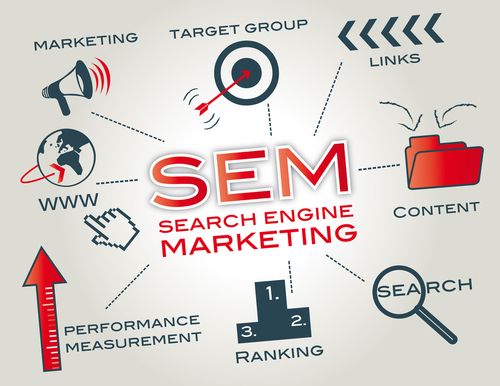
Search Engine Marketing (SEM) is a digital marketing strategy that uses paid advertising to increase visibility on search engine results pages (SERPs).
Whenever you see ads on Google that say “Sponsored” or “Ad”, those are SEM ads.
SEM is also known as:
- Paid Search
- PPC (Pay-Per-Click) Advertising
- Google Ads Marketing
With SEM, you pay only when a user clicks on your ad, making it one of the most cost-effective methods for targeted traffic.
2. SEM vs SEO: What’s the Difference?
Although both SEM and SEO aim to increase visibility in search engines, they work very differently.
| Feature | SEO | SEM |
|---|---|---|
| Cost | Free/Organic | Paid |
| Time to See Results | Slow (3–6 months) | Instant |
| Placement | Organic rankings | Paid ad slots |
| Purpose | Long-term growth | Immediate visibility |
| Control | Limited control | Full control over keywords, budget & targeting |
Most businesses use SEO + SEM together for the best results.
3. How SEM Works
SEM involves bidding on keywords that your target audience searches for. Your ads appear when users search for those keywords.
The SEM process includes:
- Keyword Research
- Creating Google Ads campaigns
- Setting budgets and bids
- Writing ad copy
- Launching ads in Google Search
- Paying only when someone clicks your ad
- Tracking performance and optimizing results
Google uses a system called Ad Auction to decide which ads appear first based on:
- Bid amount
- Quality Score
- Ad relevance
Even if your competitors have a higher budget, your ads can outperform them if your Quality Score is better.
4. Benefits of Search Engine Marketing
SEM has become a crucial marketing strategy for businesses of all sizes.
1. Instant Visibility
Unlike SEO, SEM puts your brand at the top of search results immediately.
2. Highly Targeted
You can target users based on:
- Location
- Age
- Gender
- Device (mobile/desktop)
- Interests
- Keywords
- Search intent
This ensures your ads reach the right audience.
3. Budget Control
You can start with any budget—₹200/day or ₹20,000/day.
4. Measurable Performance
You can track:
- Clicks
- Impressions
- Conversions
- Cost per click (CPC)
- ROI
Everything is measurable and optimizable.
5. High Conversion Rates
People who click SEM ads already have buying intent, making them more likely to convert.
6. Perfect for New Businesses
If you just launched a website, SEM helps you get customers instantly while SEO grows in the background.
5. Types of SEM Campaigns
Google Ads (formerly Google AdWords) is the most popular SEM platform. It offers different campaign types:
1. Search Ads
Text ads that appear on Google search results.
Best for:
- Local services
- E-commerce
- Real estate
- Educational institutions
- Healthcare services
2. Display Ads
Banner ads that appear on websites, apps, and YouTube.
Best for:
- Brand awareness
- Retargeting users
- Visual products
3. Shopping Ads
Product-based ads with images, prices, and ratings.
Best for:
- E-commerce stores
- Apparel
- Electronics
- Beauty and skincare
4. Video Ads (YouTube Ads)
Skippable or non-skippable video ads.
Best for:
- Brand promotions
- Product launches
- Tutorials and awareness campaigns
5. Remarketing Ads
Ads that target people who already visited your website.
Best for:
- Increasing conversions
- Recovering lost leads
- Retargeting cart abandoners
Remarketing is one of the highest-converting SEM strategies.
6. Keyword Research for SEM
Choosing the right keywords ensures your ads reach the right audience.
Types of SEM keywords:
- Branded keywords: your business name
- Competitor keywords: competitor brand names
- Generic keywords: “digital marketing agency”
- Long-tail keywords: “best digital marketing agency in Kannur”
- Transactional keywords: “buy running shoes online”
Tools for keyword research:
- Google Keyword Planner
- SEMrush
- Ahrefs
- Ubersuggest
Look for keywords with:
- High search intent
- Reasonable CPC
- Good search volume
- Low-to-medium competition
7. What Is Quality Score?
Google evaluates your ads using a metric called Quality Score.
Quality Score is based on:
- Ad relevance
- Expected click-through rate (CTR)
- Landing page experience
Higher Quality Score = lower cost per click.
To improve Quality Score:
- Write relevant ad copy
- Use strong keywords
- Optimize landing pages
- Improve page loading speed
8. Creating High-Performing SEM Ads
To create effective ads, follow these best practices:
Use strong headlines
Example:
“Affordable Digital Marketing Services in Kannur”
Add calls-to-action (CTA)
- Contact Now
- Book Today
- Get a Free Quote
- Shop Now
Use ad extensions
- Site links
- Call extensions
- Location extensions
Match landing pages with ads
If your ad says “Digital Marketing Services,” your landing page should highlight those services—not something else.
9. SEM Bidding Strategies
Google Ads offers different bidding options:
- CPC (Cost Per Click) – You pay for clicks
- CPM (Cost Per Thousand Impressions) – You pay for visibility
- CPA (Cost Per Acquisition) – You pay for conversions
- ROAS bidding – Ideal for e-commerce
Choose the strategy based on your goal.
10. Measuring SEM Success
Key metrics include:
- CTR (Click-Through Rate)
- CPC (Cost Per Click)
- Impressions
- Conversions
- Conversion rate
- Cost per conversion
- Return on Ad Spend (ROAS)
These metrics help you optimize campaigns for better performance.
11. Common SEM Mistakes to Avoid
Many businesses waste money by ignoring these mistakes:
❌ Targeting broad keywords
❌ Sending ads to irrelevant landing pages
❌ Not using negative keywords
❌ No conversion tracking
❌ Writing weak ad copy
❌ Ignoring mobile users
❌ Setting no daily budget limits
Fixing these mistakes can dramatically improve results.
12. Why SEM Is Essential for Modern Businesses
SEM gives businesses:
- Instant visibility
- High-converting traffic
- Brand exposure
- Full control over budget
- Measurable results
Whether you’re a small business, online store, or large enterprise, SEM can help you grow faster and reach customers instantly.
Conclusion
Search Engine Marketing is one of the most powerful digital marketing tools available today. When executed correctly, it can boost visibility, drive targeted traffic, and deliver measurable results. By combining the right keywords, compelling ads, optimized landing pages, and a strong bidding strategy, businesses can achieve exceptional ROI and outperform competitors quickly.