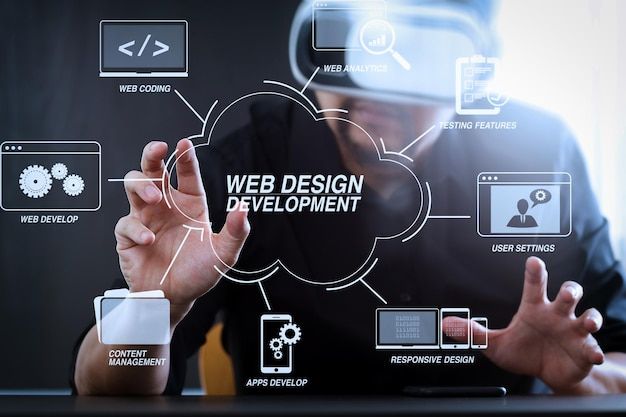
In today’s digital world, a website is more than just an online presence—it’s the face of your brand, the first impression for your customers, and a powerful tool for marketing, sales, and growth. Whether you are a small business, startup, freelancer, or large company, investing in professional website design and development is essential for long-term success.
This guide explains everything you need to know about creating a high-performing website—from planning and design to development, SEO, and maintenance.
1. What Is Website Design and Development?
Website design and development is the process of planning, designing, creating, and maintaining a website.
Website Design involves:
- Visual layout
- UI/UX (User Interface & User Experience)
- Color schemes and typography
- Images, icons, and branding
- Wireframing and interactive elements
It focuses on how a website looks and how users feel while using it.
Website Development involves:
- Coding the website using HTML, CSS, JavaScript
- Backend development (PHP, Node.js, Python, etc.)
- Database integration
- CMS setup (WordPress, Shopify, etc.)
- Functionality, speed, and performance
It focuses on how a website works behind the scenes.
Together, they create a website that is beautiful, functional, responsive, and optimized for conversion.
2. Why Website Design Matters
Your website plays a huge role in how customers perceive your brand.
Benefits of a well-designed website:
- Builds trust and credibility
- Improves user experience
- Keeps visitors engaged
- Reflects your brand identity
- Increases conversions and sales
- Reduces bounce rate
Research shows that users decide within 0.05 seconds whether they like your website. Good design creates an instant positive impression.
3. The Website Development Process: Step-by-Step
Here’s a detailed breakdown of how a professional website is created:
Step 1: Planning & Strategy
Every great website starts with understanding:
- Business goals
- Target audience
- Competitor analysis
- Required features (e-commerce, booking system, blog, etc.)
- Content plan
This step ensures the website aligns with your brand and customer needs.
Step 2: Wireframing & UI/UX Design
Designers create a blueprint for the website’s structure.
UI/UX focuses on:
- Navigation flow
- Page layouts
- Call-to-action (CTA) placement
- Responsiveness
- Ease of use
Once approved, high-quality visual designs (mockups) are created using tools like Figma or Adobe XD.
Step 3: Front-End Development
This stage converts the design into code.
Technologies used:
- HTML – Structure
- CSS – Styling
- JavaScript – Interactivity
- Frameworks – React, Vue, Bootstrap, Tailwind
This ensures the site looks great and functions smoothly across devices.
Step 4: Back-End Development
This is the engine of the website.
Backend tasks include:
- Database setup (MySQL, MongoDB)
- Server-side programming (PHP, Node.js, Python, etc.)
- API integrations
- Building login systems, payment gateways, admin dashboards
Back-end development powers all the dynamic features.
Step 5: CMS Integration (Optional)
Many businesses prefer using a CMS (Content Management System) to update content easily.
Popular CMS platforms:
- WordPress
- Shopify
- Joomla
- Drupal
With a CMS, you can manage blogs, pages, products, and images without coding.
Step 6: Testing & Quality Assurance
Before launch, developers test the website for:
- Speed
- Mobile responsiveness
- Browser compatibility
- Broken links
- Security vulnerabilities
- Form and payment functionality
Testing ensures a smooth user experience.
Step 7: Launch & Deployment
The final website is uploaded to a hosting server and connected with a domain name. After a final review, the site goes live and becomes accessible to users worldwide.
4. Essential Features of a High-Quality Website
To succeed online, your website must include:
✔ Responsive Design
Works perfectly on mobiles, tablets, and desktops.
✔ Fast Loading Speed
Slow websites lose customers. Optimizing code, images, and caching improves speed.
✔ SEO-Friendly Structure
Helps Google rank your website higher.
✔ Strong Security
SSL certificates, secure servers, and regular updates protect your site.
✔ Clean Navigation
Visitors should easily find what they’re looking for.
✔ Compelling Content
High-quality text, images, and visuals define your brand.
✔ Clear Call-to-Actions
Buttons like Contact Now, Shop Now, Book an Appointment drive conversions.
5. Importance of SEO in Website Development
SEO (Search Engine Optimization) ensures your website appears at the top of search results for relevant keywords.
On-page SEO practices:
- Keyword-optimized content
- Meta titles and descriptions
- Image alt tags
- Clean URL structure
- Internal linking
Technical SEO practices:
- Fast loading
- Mobile-first design
- XML sitemap
- Schema markup
- Secure HTTPS
A well-developed website must be SEO-ready from the start.
6. Types of Websites You Can Build
Depending on your business needs, you can build:
- Business website
- E-commerce store
- Portfolio website
- Blog or news site
- Booking or appointment system
- Learning management system (LMS)
- Real estate website
- Restaurant or café website
- Service-based website
Each has its own design and development requirements.
7. Trends in Modern Web Design (2025)
To stay relevant, websites today follow trends like:
- Minimalistic UI
- Interactive animations
- Dark mode support
- Micro-interactions
- Advanced typography
- AI chatbots
- Voice search optimization
- 3D elements
- High-contrast, accessibility-focused design
Modern users expect a sleek, intuitive, and engaging online experience.
8. Website Maintenance: The Key to Long-Term Performance
A website must be maintained regularly to stay secure and updated.
Maintenance tasks include:
- Updating plugins and software
- Fixing bugs
- Improving performance
- Monitoring security
- Uploading new content
- Backing up data
Without maintenance, websites can become slow, outdated, and vulnerable.
Conclusion
A well-designed and professionally developed website is one of the most valuable investments for any business today. It helps you attract customers, build trust, showcase your brand, and achieve your business goals. Whether you are launching a new website or redesigning an old one, focusing on design, development, SEO, and maintenance will ensure long-term success.